
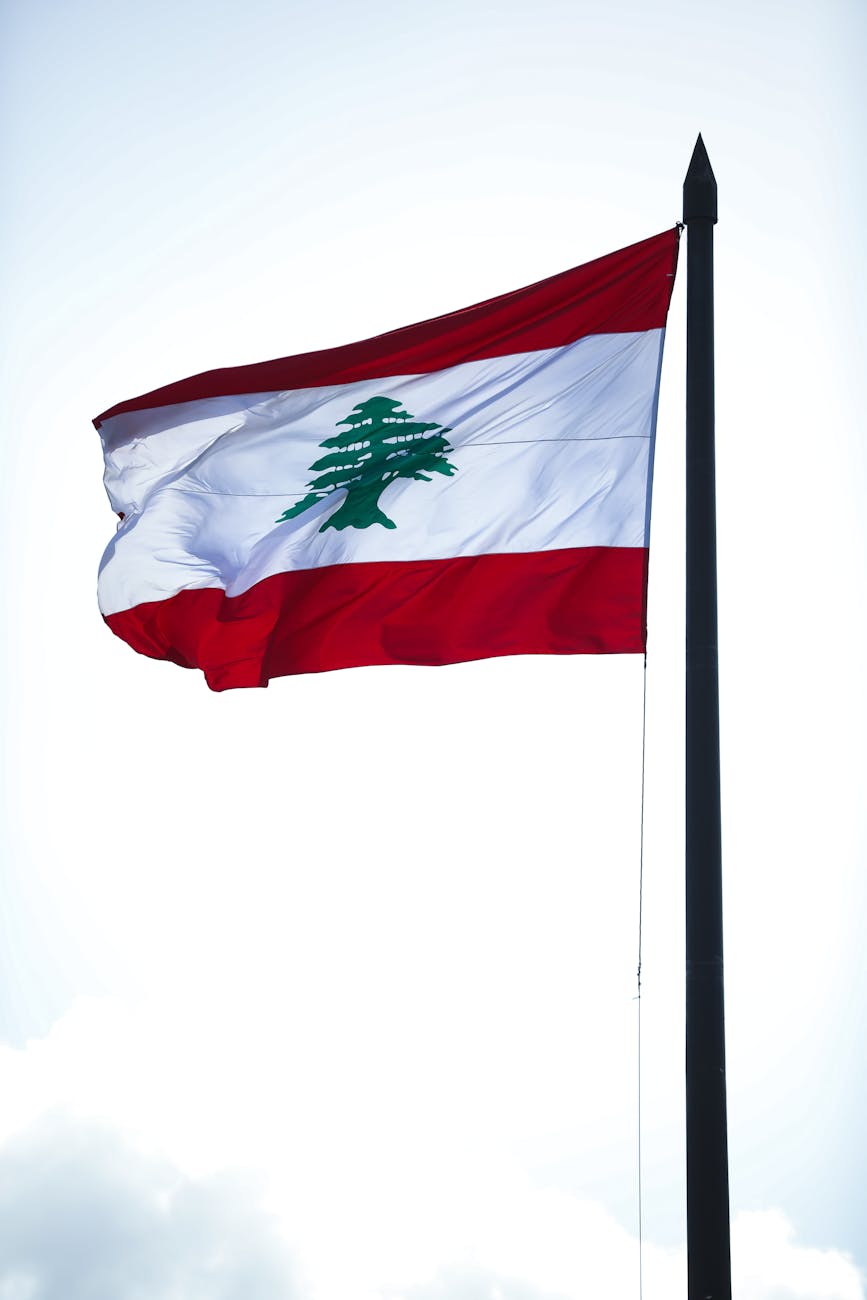
Dahieh, in south Beirut, seems a typical, poor neighbourhood. It’s crowded and difficult to navigate. It’s mostly Shīʿī. It’s dotted with billboards showing pictures of Ayatollah Khomeini, Ḥasan Naṣrallāh and other Shīʿī leaders and martyrs. Many women veil, the Muslim call to prayer is omnipresent and sermons are regularly heard on the radio. The rhythm of time is marked by religious festivals like ʿĪd and ʿĀshūrāʾ. Most people in the West would consider this community backward, regressive and anti-modern. That’s not to mention it being the cradle of Ḥizbullāh, an organisation designated by many countries as a terrorist group. Yet, many people here consider themselves deeply modern.
The question of what is modern is not so simple. We might immediately think of New York, with its gleaming skyscrapers, or perhaps Singapore, a thriving financial centre, or maybe even Finland, supposedly the happiest country in the world. But what exactly is the quality that makes those places modern? New York has fancy buildings, but so does Riyadh in Saudi Arabia. Finland has extensive social welfare programs for its citizens, but so does Qatar. And what role does religion have in the modern? We usually think that the West has been on an inexorable march to modernity ever since the Industrial Revolution and the Age of Enlightenment. That was also when we assume religion began to lose its hold over the state, i.e. states began to secularise. However, the link between the secular and the modern is not so simple: Saudi Arabia and Qatar are hardly bastions of secularism, while the USA, which mandates the state’s separation from religion in its constitution, is seeing Evangelical Christians reach unparalleled levels of influence in government.
What, then, produces the modern? Is there any meaning to the term? Or is it just code for a mix of stereotypes? It does not seem to be entirely meaningless: there are surely more differences between Switzerland and the Côte d’Ivoire than their mix of industries. Technology, education, health care and good infrastructure are surely all important. A good quality of life is also important, so also ready access to consumer goods. But what about the other things we associate with the modern: free speech, universal suffrage, a fair justice system, equal community participation? Perhaps it may be simpler to start with the essentials—technology, education, health care, infrastructure. Many scholars—e.g. José Casanova1, G. W. F. Hegel2, Charles Taylor3, Max Weber4, Harvey Cox5 —have also argued that secularisation is vital to modernity. Whether that is true depends on whether elements of modernity can be found in not-secular societies—such as Dahieh in Lebanon.
Lara Deeb, in her work An Enchanted Modern, a study of Shīʿī communities in Dahieh made around the late ‘90s, investigates the links between religion and modernity. She argues that piety meant not only prayer or fasting to these Muslims, but also humanitarian work, as well as political work to further the goals of Ḥizbullāh, the main Shīʿī party. For the pious Shīʿīs, “these three elements are so inextricably intertwined as to be one thing,”6 all considered pious action. Their aims “included political representation, education toward authenticated Islam, and improved education, health care, and other social services, especially in the absence of government-supported public services.”7 This means that humanitarian work, such as helping in schools, running orphanages, providing healthcare—in short, many of the elements of modernity—are not only seen as good things, but as proper acts of worship. In other words, the process of modernisation is enabled, facilitated and motivated by religion.
The links between the modern and the religious go even beyond this, however. For many of the people Deeb interviewed, they are not modern in spite of their deep religious commitment, but because of it. “Modernity,” for them, ultimately denotes progress. This includes the more public and visible religion that has developed in these communities, the greater awareness of and adherence to religious rulings8 and the abandonment of such “backward” practices as self-flagellation.9 Thus, the modern is the religious: that which is most religious is most modern and vice-versa. By describing themselves as modern, these Shīʿīs were comparing themselves not only with Lebanon half a century ago, but also with the West, which for them is as spiritually backward as the Lebanese were once materially backward.10
Those humanitarian services are delivered through jamʿīyāt, charity groups relying on volunteers. One such jamʿīyah, al-Mabarrat, “has grown into one of the most respected charitable associations in Lebanon”11 and provides schooling for many poor children. Al-Mabarrat was established by Ayatollah Faḍlullāh and funded by donations from his supporters.12 Many women work for al-Mabarrat and other such institutions, some as volunteers and some as fully paid workers. Not only children are educated there, but they also hold “frequent workshops for mothers about hygiene, health and other issues.”13 Other institutions, such as the Islamic Charity Emdad Committee, an affiliate of Ḥizbullāh, provide “monthly support and supplemental nutritional, educational, housing, and health assistance”14 to the children of fathers incapable of providing for them, and who are not covered by assistance programmes for the families of martyrs. Poor families are also provided for, not only through food donations, but also through attempts “to break the poverty cycle,”15 showing a concern with systemic poverty usually associated with Western charities.
This is hardly a perfect system. In many ways, the jamʿīyāt are responding to the poor state of public services in Lebanon and trying to replace them. However, the “state within a state” that Ḥizbullāh and its affiliates created ended up further dampening reform efforts in Lebanon as a whole. “In May 2008 the cabinet voted to take over the group’s telecommunications network, which it had established independently of the state. In response, Nasrallah sent his fighters onto the streets of Beirut in a show of force. The city rang to the sound of gun battles not heard since the civil war, and frightened residents once again took shelter in windowless corridors and bathrooms.”16 Secondly, the intensely sectarian nature of politics in Lebanon and the deeply religious identity of these jamʿīyāt mean that they are responding only to the needs of the Shīʿī community, so this is a rather exclusive modernity. One could also ask whether the mix of practical education and religious education is really wise. It may well be that “prominent Lebanese Shi‘i ‘ulama have … supported science,”17 yet if religious teaching and science conflict, say on the theory of evolution, then it is difficult to imagine these schools giving an unbiased presentation of the scientific findings.
However, these objections—governmental corruption, propaganda, biased teaching, providing only for one’s own community—all hold for clearly modern states as well. The French government’s reform efforts were stymied by the gilets jaunes; the Japanese curriculum still glosses over many of the atrocities that country committed in World War 2; many government institutions are regularly accused of bias in whom they provide for.
Are these jamʿīyāt, then, an example of religion guiding modernisation or not? That is difficult to answer. On the one hand, helping with education, health care and so on is seen as a religious act and encouraged. On the other hand, these Shīʿīs may have simply attempted to integrate Western ideas of modernity with their own religious belief. Deeb points out that many people who spoke with her were responding to Western assumptions and stereotypes about them and attempting to portray themselves as modern by using Western definitions of modernity. “For example, in the pious modern, women working outside the home represented women improving themselves while contributing to the greater good of the community, in keeping with authenticated Islam. Yet when someone pointed to these women in order to demonstrate modern-ness to me, a paradigm shift occurred and they—just for that moment—represented women who were “liberated” from family and community obligations.”18 This links to a second, more controversial aspect of modernity: women’s rights.
Women and their status in society have been central to conceptions of modernity since long before women’s suffrage. This is especially true when describing modernity in Islamic societies. In 1888, Reverand Robert Bruce declared, “Time would fail me to enter into the whole subject of … the evils which spring from the immense difference between the glorious state which our Lord introduced into Christianity when He raised woman to her proper state in society, and on the other hand, the opposite effect in Mohammedanism, caused by Mohammed when he degraded women even lower than she had ever been before.”19 While it may not be presented in such brusque terms now, this succinctly describes the West’s outlook on women’s rights in Islamic societies: nonexistent. Such arguments have been used to justify the West’s “civilising” mission in the Middle East, which had… mixed results. They have also been used to attack Islam as an “ideology” which promotes hatefulness to women. This is part of a broader argument which seeks to paint the West as modern and the Islamic world as backward, with Islam as the chief suspect and women’s rights as the chief witness. The Shīʿī women Deeb interviewed strongly refuted this argument.
Firstly, they emphasised community service and volunteering as an important way for pious women to participate in their community. “This link between women’s volunteerism and the pious modern not only constructed volunteering as a powerful … marker of morality, but also emphasized women’s public activity as a necessary component of their piety within the framework of authenticated Islam.”20 Note “public activity.” The stereotype is that Muslim women are perpetually house-bound, whereas these women are actively participating in their community. This public activity was also shown in the ʿĀshūrāʾ celebrations, where women formed an important part of the parade. Afterwards, they held gatherings where a female preacher would stand before a large crowd of women, narrate the events of ʿĀshūrāʾ and give lessons.21 These women would also participate in debating their faith, “often [taking] up the meaning of events, texts, and beliefs,22” so rejecting the idea that they are passive recipients of male learning.
The issue of housework is particularly sensitive. It is certainly considered essential: “All the women I worked with prioritized household responsibilities, sometimes asserting strongly that women who could not keep their households ‘in order’ should not be involved in community service.”23 At the same time, however, many attempted to argue against Western stereotypes: for example, one person said, “When a young woman becomes a wife, housework remains a voluntary matter, she chooses to do it or not, for the marriage contract does not obligate her from the perspective of the sharī‘a to do housework, or even to raise the children.”24 While there is clearly a strong emphasis on housework, the idea of it not being obligatory or of “teaching men to share domestic responsibilities”25 is certainly much closer to the Western idea of modernity, even if it is not exactly liberal. In short, Deeb describes the ideal for a woman as being “educated, outspoken, strong, and visible while also being pious and committed to her faith, family, and community.”26 While this is not a liberal picture, it could well be a modern one.
This whole argument is admittedly a little abstract. Does it even matter what it means to be “modern”? Surely it is more useful to think about average literacy and numeracy skills, life expectancy and good hygiene, regardless of what is driving it? However, in a world where people are so committed to such subjective ideas as freedom, justice, morality and, yes, modernity, it is important to correct knee-jerk assumptions about the role of religion and what the modern can, or should, look like. So, if we find signs of modernity in a crowded district in the Shīʿī parts of Beirut, perhaps that can give us the impetus to investigate our assumptions a little more critically.
Bibliography
Asad, Talal. Formations of the Secular : Christianity, Islam, Modernity. Stanford University Press, 2003.
Deeb, Lara. An Enchanted Modern : Gender and Public Piety in Shi‘i Lebanon. Princeton University Press, 2006.
Sly, Liz. “The rise, fall and contested future of Hizbullah.” The Economist, 16th May, 2025. https://www.economist.com/1843/2025/05/16/the-rise-fall-and-contested-future-of-hizbullah.
Starrett, Gregory. Putting Islam to Work : Education, Politics, and Religious Transformation in Egypt. University of California Press, 1998.
Starrett, Gregory. “The Varieties of Secular Experience.” Comparative Studies in Society and History 52, no. 3 (2010): pp. 626–51. https://doi.org/10.1017/S0010417510000332.
- Talal Asad, Formations of the Secular : Christianity, Islam, Modernity (Stanford University Press, 2003), 181.
↩︎ - Ibid., 192.
↩︎ - Gregory Starrett, “The Varieties of Secular Experience,” Comparative Studies in Society and History 52, no. 3 (2010): pp. 629, https://doi.org/10.1017/S0010417510000332.
↩︎ - Asad, Formations of the Secular , 181.
↩︎ - Starrett, “The Varieties of Secular Experience,” 632.
↩︎ - Lara Deeb, An Enchanted Modern : Gender and Public Piety in Shi‘i Lebanon (Princeton University Press, 2006), 35.
↩︎ - Ibid., 75.
↩︎ - Ibid., 102.
↩︎ - Ibid., 16-7.
↩︎ - Ibid., 23-4.
↩︎ - Ibid., 89.
↩︎ - Ibid., 88-9.
↩︎ - Ibid., 178.
↩︎ - Ibid., 90.
↩︎ - Ibid., 178.
↩︎ - Liz Sly, “The rise, fall and contested future of Hizbullah,” The Economist, 16th May, 2025, https://www.economist.com/1843/2025/05/16/the-rise-fall-and-contested-future-of-hizbullah
↩︎ - Deeb, An Enchanted Modern, 28.
↩︎ - Ibid., 33.
↩︎ - Gregory Starrett, “2. Education and the Management of Populations: Women: An Educated and Enlightened Motherhood,” in Putting Islam to Work : Education, Politics, and Religious Transformation in Egypt (University of California Press, 1998).
↩︎ - Deeb, An Enchanted Modern, 207.
↩︎ - Ibid., 141-48.
↩︎ - Ibid., 121.
↩︎ - Ibid., 210.
↩︎ - Ibid., 210.
↩︎ - Ibid., 215.
↩︎ - Ibid., 217.
↩︎


 The Oxford Arabist
Leave a comment