
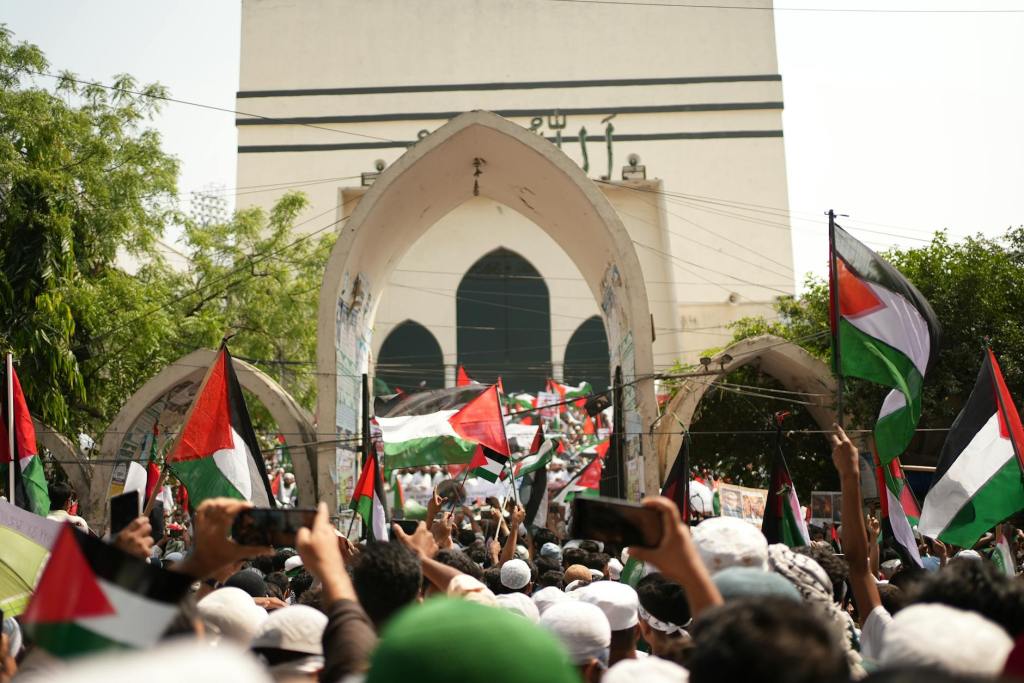
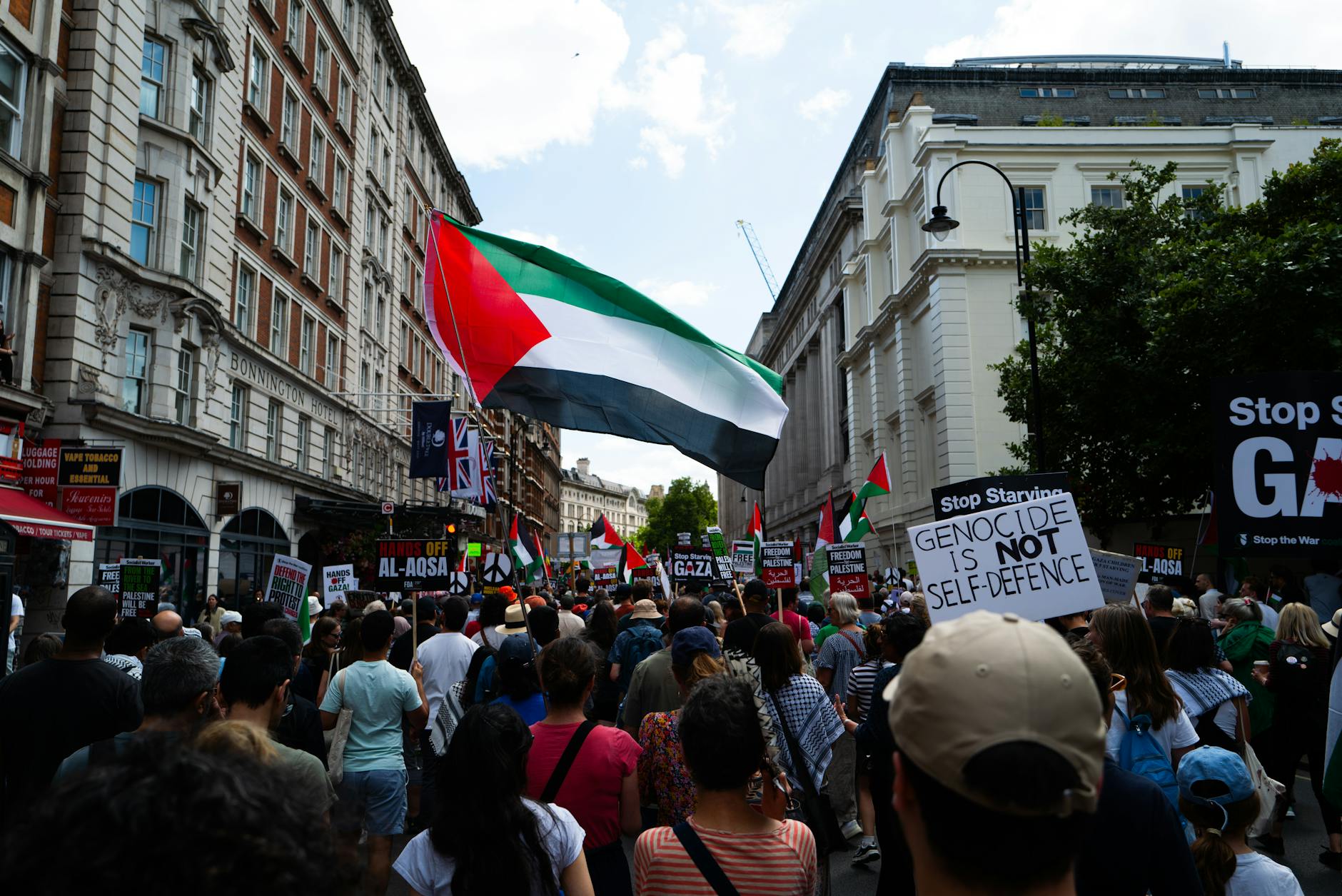
From Santiago to São Paulo, Bogotá to Buenos Aires, some of the world’s largest demonstrations in support of Gaza have taken place thousands of kilometres from Palestine. Latin American governments, activists, and prominent cultural figures have emerged as some of the most vocal critics of Israel’s military campaign – a stance often dismissed as ideological or reactive.
Yet this solidarity is neither new nor incidental. For over two centuries, Latin America and the Levant have been connected through migration, memory, and shared encounters with colonialism and global power asymmetries.
Today’s advocacy for Palestine is not simply a response to the devastation in Gaza; it reflects a deeper diasporic history in which millions of Latin Americans trace their roots to Palestine and the surrounding region, carrying those histories into daily life. What began as a story of marginal traders and displaced families has evolved into one of political influence, visible cultural exchange, and transnational engagement.
Looking further still, the experiences and political struggles of Latin America’s Indigenous communities offer an additional, often overlooked parallel to the contemporary Middle East. The marginalisation of Mapuche and Zapatista communities in Chile and Mexico echoes aspects of Palestinian narratives, forming a third axis of connection grounded in shared experiences of dispossession and resistance – and serving as a harrowing reminder of the long-term consequences of unresolved occupation.
At a moment when xenophobia and anti-migrant rhetoric increasingly shape political discourse in Europe and North America, understanding this transatlantic connection offers more than historical insight. It challenges enduring hierarchies of power within the international system and raises questions about whose suffering is afforded legitimacy, particularly in debates shaped by Global North perspectives.
The origins of an identity
The foundations of Latin American–Levantine solidarity were laid not in reaction to crisis, but through shared histories of migration and displacement.
Between 1860 and 1914, approximately 600,000 Arabic speakers left the declining Ottoman Empire in search of security and opportunity. Latin America emerged as a key destination as Europe and the United States narrowed immigration pathways through industrial preference and restrictive legislation, including the 1924 Johnson–Reed Act.
Initially labelled turcos, these migrants established enduring communities through chain migration, embedding Levantine heritage within national identities across the region.
Today, an estimated 17–20 million Latin Americans trace their ancestry to the Arab world. Their presence continues to shape regional politics, popular culture, and contemporary expressions of solidarity with Palestine.
From presidents to pop stars
This legacy is visible across public life. Argentina’s former president Carlos Menem, the son of Syrian immigrants, was widely known by the same nickname as early settlers: El Turco. El Salvador’s current president, Nayib Bukele, comes from a Palestinian family, while Brazil’s former president Michel Temer is the son of Lebanese migrants.
Cultural figures such as Shakira and Salma Hayek – often presented as quintessential Latin American icons – also have Lebanese family origins, though this dimension of their identity is frequently underplayed.
For some public figures, these connections inform political outlooks and expressions of solidarity with Palestine; for others, they remain peripheral. This disparity reflects a broader tendency to minimise Middle Eastern heritage when it does not align with more familiar identity frameworks shaped by Global North narratives.
Within renewed conversations on South–South cooperation, such inconsistencies reveal how older imperial logics continue to influence whose identities are foregrounded – and whose are quietly erased.
The (soft) power of the pitch
Few examples illustrate this continuity more clearly than Chilean football club Club Deportivo Palestino. Founded in 1920 by Palestinian immigrants, the club wears the colours of the Palestinian flag, while supporters often don the keffiyeh as a symbol of cultural identity.
Despite being over 13,000 kilometres from Gaza, the club has remained closely linked to the realities of occupation and conflict. In 2014, its decision to feature a map of pre-1948 Palestine on team kits sparked controversy, with many members of the Jewish community accusing the club of politicising the sport.
Beyond symbolism, material consequences have also followed. Restrictions associated with the occupation led to the closure of Palestino’s youth academy in Gaza, severing a rare institutional link between diaspora and homeland.
Yet what distinguishes Palestino is its sustained recognition of Chile’s estimated 500,000-strong Palestinian community – the largest outside the Arab world. For over a century, the club has provided a public space where Palestinian identity is openly expressed within a national cultural framework.
“Sisters of Palestine”
Edward Said once warned: “You cannot continue to victimize someone else just because you yourself were a victim once — there has to be a limit.”
This insight cuts to the core of Latin American readings of Palestine: histories of dispossession do not justify new regimes of domination, and victimhood does not confer moral immunity. Across Latin America, lived experience with colonialism and occupation sharpens this ethical clarity.
This helps explain why Club Deportivo Palestino, while rooted in Palestinian identity, resonates widely through its Chilean cultural form.
Football is a key vehicle of national identity in Latin America, which renders Palestino palatable for Global North audiences, without stripping it of political meaning. This has also made it an ideal case study for many media outlets, like Al Jazeera and The Guardian.
However, the solidarities it represents predate recent media attention and run far deeper than symbolism.
Parallels between Palestine and Latin America’s own colonial histories are particularly visible in Chile. The struggle of the Mapuche (displaced into state-imposed reducciones, denied constitutional recognition, and criminalised for resisting extractive industries) mirrors patterns of dispossession familiar to Palestinians. Unsurprisingly, Palestinian-Chileans have become some of the Mapuche’s most consistent allies, marching together on Indigenous Peoples’ Day and campaigning jointly for the release of detained activists.
Mapuche weychafe, Moira Millán, recently wrote a powerful open letter to her ‘Palestinian sisters’, depicted in a YouTube video by A.J+ to increase outreach. Millán painfully shares “just like your people, dear Sister, mine also know the injustice of disposession, the pain of genocide, the desolation of being slaves in our own land”, repeating her call for freedom in both English and Mapudungun: “Weayiñ lamngen Palestine. We will win, sister Palestine”.
These emotive solidarities extend beyond Chile. Bolivia’s former president Evo Morales, the country’s first leader of indigenous descent, renounced a Visa exemption agreement with Israel in 2014, declaring the country a “terrorist state” and simultaneously situating Gaza within a global anti-colonial struggle.
Without empathy, multilateralism is dead
Said’s warning resonates precisely because Latin American history shows how easily liberation narratives can coexist with the continued marginalisation of indigenous peoples, reminding us that justice demands consistency and emotional literacy, not selective memory.
As a Jewish person, it is devastating that the latter has come to cloud contemporary debate.
What distinguishes Latin American engagement with Palestine is this unique emphasis on empathy rather than distant sympathy.
The conflict is not viewed as a far away tragedy, but as part of a recognisable global pattern in which colonial violence repeats itself under new guises. In this context, protest is less an emotional outburst than a reflective warning.
The rising xenophobic and anti-migration sentiment of contemporary Western political discourse increasingly frames global interconnectedness – and, by extension, empathy with struggles beyond national borders – as a threat. Such framing risks narrowing debate and undermining the principles of multilateralism and international law.
The consequences of this erosion are most acutely felt by communities in the Global South, who are frequently excluded from shaping the narratives that most affect them. As international politics continues to trend toward unilateralism, the lessons embedded in Latin American–Palestinian solidarity offer a timely reminder: without empathy, multilateralism completely loses its meaning.
Far-right narratives aim to isolate friction in the Middle East, despite the conflict deeply connecting to worldwide examples of Western imperialism — such as Trump’s capture of Venezuelan President Nicolás Maduro. Largely different players, but the same cruel game.
This adds to the rising xenophobic, anti-migration sentiment of Europe and North America, whose divisive lexicon frames globalisation (and in turn personalised empathy with the Palestinian struggle) as negative.
Such discourse threatens the possibility of a two-state solution by reinforcing harmful, one-sided attitudes that completely violate the foundations of multilateralism and international law.
Who suffers most from these violations? Routinely, the same members of the Global South who are left isolated from current debate. 2026 thus far has been no different, already projecting a harrowing future of trend-based advocacy and rising unilateralism that threatens the legitimate order of sovereignty and cultural memory.


 The Oxford Arabist
Leave a comment