
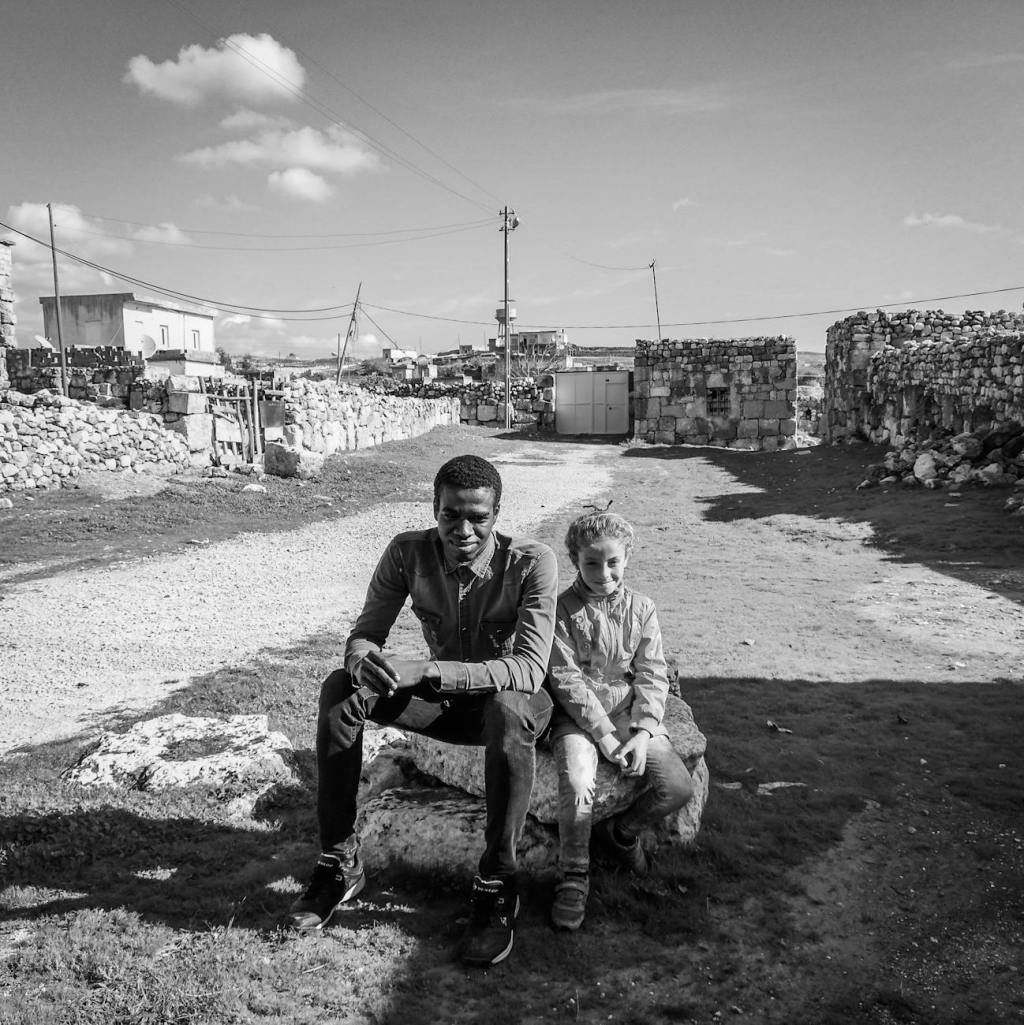
“Houses are murdered just as their inhabitants are killed and the memories of things are slaughtered, wood, stones, glass, iron, mortar – scattered like human limbs. And cotton silk, linen, notebooks, books – all torn apart like the unspoken words of people who did not have the time to say them.”
– “The House Murdered”, Mahmoud Darwish.
Architecture is a discipline that organises social life through space, and hence can never be politically neutral. Decisions concerning form, placement, and circulation inevitably shape relations of power, access, and control. From the Rana Plaza collapse to the Grenfell Tower fire, the consequences of architectural and planning decisions demonstrate how the built environment can serve capital and state agendas at the expense of human life. Such crime starts on the drawing board itself.
In this piece, I examine the built environment in the West Bank and analyse how architecture is weaponised and rendered complicit in systems of control, surveillance, and apartheid. Architectural and planning practices employed in this region have created a distinct urban landscape to control Palestinians, claim land and assert Israeli presence.
Colonial and Apartheid Policies Infringing on Housing Rights
Since the 1948 Nakba, Israel has seized vast areas of Palestinian land and villages, reclassifying them as “State Land” and allocating them to Jewish-only settlements, nature reserves and military zones. This is while the Palestinian population faces severe housing shortages and demolitions. Having limited access to adequate and affordable housing further results in Palestinian neighbourhoods being overcrowded and underdeveloped. This is intentionally engineered through planning permission policies.
Zoning laws in East Jerusalem and Area C of the West Bank (both under full Israeli control), make it exceptionally difficult for the Palestinian population to obtain building permits. It is no surprise, then, that many Palestinians resort to building without permits. Houses constructed without these nearly impossible-to-get permits face constant risk of demolition. Entire residential blocks housing multiple families have been demolished, at times while families were still inside, causing their deaths.
Controlling lived space ultimately controls people’s psychological wellbeing and experience of childhood. The trauma of displacement that Palestinian children who grow up witnessing their family home demolished could be prevented if planning permission policies did not seek to assert Israeli presence and differences between Palestinian and Israeli homes.
Conversely, Israeli settlements, (considered illegal under international law), are developed with state priority and equipped with comprehensive resources and infrastructure.
Maintaining Separation
Separation barriers, roads, and checkpoints enforce segregation by regulating Palestinian movement and restricting their access to land and essential infrastructures. Settlements in the West Bank rely on walls, fences, checkpoints, sterile areas and segregated road networks with motorways operating as borders. In accordance with state and military priorities, these covert border devices spatially reorganise the landscape. At the state’s discretion, they can be redesigned to either shrink or expand a designated territory.
To control a territory and separate an entire population, an architect must first create a differentiation between people’s mobility, speed and freedom of movement.
In the West Bank, settlements are connected by motorway networks that only the Israeli communities have access to, allowing settlers to move freely and rapidly. In contrast, the Palestinian population, who are barred access from these infrastructures, are systematically slowed down, diverted and obstructed.
Palestinians are further slowed down by every border they encounter, every checkpoint that they must pass through to allow them entry to the next area, and slowed down by every turn they must take from reaching a fence or valley that they, simply by being Palestinian, are not permitted to cross.
At all times, their pace, mobility, and spatial access, remain subject to Israeli state control, which uses infrastructural and architectural design to engineer this level of restriction and control. In this way, urban planners are intentionally shaping the built environment to maintain apartheid.
Settlements Dominating the Palestinian Landscape
In its settlements in the West Bank, Israel has built 28,000 homes in the past year alone. Yet, all houses are semi-detached and planning regulations in this area mandate the use of red tiled roofs across all Israeli settlements. These distinctive red roofs aid the military navigation by allowing aerial forces to quickly distinguish between Israeli settlements and Palestinian villages.
A red tiled roof signifies that an Israeli family lives in that home. This communicates to military forces which areas they are permitted to bomb and bulldoze and which areas they must protect. Such architectural design serves to distinguish between the value and worth placed on the lives of Palestinians compared to the value and worth placed on the lives of Israelis. Red roofs on Israeli settlements further serve to reduce Palestinian territories by making Palestinian villages and communities less visible.
The planning decisions regarding the layout of these settlements are also significant in asserting Israeli presence and dominating the Palestinian landscape. Settlements are frequently constructed atop hilltops and arranged in ring-like formations. By design, they tower over the Palestinian villages, allowing the Israeli inhabitants to survey the entire terrain around and below.
Israeli journalist and author Gideon Levy notes that “they [newly built Israeli settlements] are almost always up there, the settlements, dominating the plateau, challenging, provoking, picking a fight. […] From everywhere, you can spot the settlement on the hilltop, looming, threatening, dreadfully colonial.”
Planning decisions also strategically place military bases like the former Oush Grab base on high points as a means to control the surrounding Palestinian neighbourhoods. Through these designs, the architect’s skills in strategic placement are used to aid in military strategy and warfare. Designing physical structures as tools to dominate surrounding areas serves not only as an intimidation tactic to highlight power but also as a means of surveillance. Such layout is similar to the military towers that resemble Foucault’s Panopticon.
Panopticon Military WatchTowers
In the Beit Jala region of the West Bank, a wall surrounding the area acts as a border, with some military towers acting as watchtowers built near it. These watchtowers resemble the Panopticon model of surveillance, a design where watchtowers are centred around a ring of other structures.
In the West Bank, the watchtowers centre around Palestinian homes and overlook Palestinian villages. The overlooking tower is designed to allow a single observer to view and surveil the surrounding area from all angles while those outside, namely the Palestinian population, are unable to tell whether an observer is present and watching them from the tower or not. This design encourages Palestinians to internalise the military gaze, provoking chronic anxiety and psychological intimidation at the possibility of being surveilled at all times, fueling paranoia.
Foucault used the example of the Panopticon design to argue that the uncertainty of being watched is far more powerful than actually being constantly observed. Therefore, since the Palestinian population are unable to know for certain whether they are being watched at all times or not, they will assume that they are, psychologically impacting their sense of safety and security.
Urban Warfare and Demolitions
Architecture is a profession that serves society by reconstructing space, designing the built environment, and sustaining human life in this way, rather than destroying it. In Israel, however, architectural knowledge has been appropriated for military purposes and directly contributes to urban warfare. Spatial theory and architectural expertise have been used to instruct the army in how to read, navigate, and manipulate the built environment to ultimately facilitate its destruction.
In 2002, under Operation Defensive Shield, the Israeli army occupied the West Bank. Invading the cities was most challenging for soldiers, as they did not recognise the architectural landscape of the Old City. As a result, the Israeli military adopted a strategy of spatial domination, using D9 bulldozers to carve paths through dense urban roads and infrastructures, including the Jenin refugee camp.
Destroying all physical structures that were obstructing their way allowed space for tanks to enter. When Palestinians whose homes were demolished were pushed into the streets, tanks fired at them, massacring entire families at a time. Many Palestinian homes were demolished with families inside and bulldozers were then used to crush civilians to death. As documented by UN reports, 497 Palestinians were killed in Operation Defensive Shield alone.
The Israeli army has always used bulldozers to destroy Palestinian infrastructure. However, Operation Defensive Shield was the first time that bulldozers were embedded into the battlefield. The US later analysed this attack on Jenin and Nablus to consider how to tackle urban warfare in Iraq. The area was also used as a mock up ‘Arab city’ training site for US and Israeli soldiers.
Militarising Domestic Space
One tactic employed by the Israeli military during its urban warfare against Nablus was to enter Palestinian homes by drilling holes through internal walls. From both a psychological and architectural viewpoint, this turns the private and intimate space of the home into a public space that the army now circulates in, and as a result, the public space of the street where Palestinians are pushed out to, becomes the battleground where they are massacred. Such violence serves to blur the lines of the public and private domain.
In 2024, Israeli soldiers continued to loot the houses that they pillaged and destroyed. In multiple videos, IDF soldiers boasted about rummaging through Palestinian women’s undergarments. Other posts from Israeli soldiers included images of Palestinian women’s undergarments and children’s toys tied to tanks that had just moments before been used to demolish their homes. The Israeli army is not satisfied to stop at reducing Palestinian infrastructure and lives to rubble but insists on violating the privacy of Palestinian people’s lives by invading the most private and intimate of spaces. Such invasion and destruction of both public and private space opposes the very core principles of Architecture.
When architecture is called in service of military domination and colonial governance, it negates its principles of construction, care, shelter and protection. Instead, such architecture opposes its purpose by actively participating in violence, inequality, and apartheid. As Israeli architect Eyal Weizman has argued, “when violence is enacted through architecture, architecture must rise to resist it”.
References:
Addley, Esther. “Lines in the sand”. The Guardian, 2002.
Al Jazeera. “The Architecture of Violence.” Rebel Architecture series, 2014.
Amnesty International. Israel’s apartheid against Palestinians.
Braier, Michal, Cohen Bar, Efrat. Urban Patterns of Segregation and Violence in Jerusalem. Identity-based mass violence in urban contexts, 2025.
Campbell, David. Construction Site: Architecture and Politics in Israel/Palestine. Theory and Event, John Hopkins University Press, Volume 7, Issue 4, 2005.
Collective Punishment & Ethnic Cleansing: Israel’s Destruction of Palestinian Homes. IMEU, 2014.
De Sousa, Ana. The architecture of violence. Rebel Architecture – Special Series by Al Jazeera. CAPI.
Delso, Rodrigo. Concrete punishment: Time, architecture and art as weapons in the Israeli-Palestinian conflict. Political Geography, Volume 66, 2018.
Fayala, Ines Emna. Informality as a Right to Necessity?. Geneva Graduate Institute, Global Challenges, Special Issue 2, 2023.
Humaid, Maram, Nofal Aziza. “Collective punishment: Israel demolishes Palestinian homes.” Aljazeera, 2023.
Israel’s housing policies in occupied Palestinian territory amount to racial segregation – UN experts. United Nations Human Rights Office of the High Commissioner, 2022.
Jabareen, Yosef. The architecture of dispossession: On the dark side of architecture and art in transforming original spaces and displacing people. Sage Journals, Volume 43, Issue 1, 2024.
Kamaisi, Rasim. The Trap of Urban Planning Development in Jerusalem. University of California Press, 2019.
Kastner, Jeffrey, Najafi, Sina, Weizman, Eyal. The Wall and the Eye: An Interview with Eyal Weizman. Cabinet, Issue 9, Childhood, Winter 2002/03.
Makdisi, Saree. A racialised space: social engineering in Jerusalem. University of California Press, 2009.
Muzamil Hussain, Sheikh. “Role of architecture and urban form in the Israel-Palestine Dispute”. MENA-Forum, 2013.
Ondrich, Laura. “Undermining Impasse: The Role of Architecture in the Israeli-Palestinian Conflict”. Architecture Senior Theses. 99, 2010.
Power, Susan. The Legal Architecture of Apartheid. Al-Haq, 2021.
Riding, Alan. “Are politics built into architecture?”. New York Times, 2002.
Sa’di-Ibraheem, Yara. Cabling and un-cabling Palestine/Israel: Toward a theory of cumulative infrastructural injustice. Political Geography, Volume 116, 2025.
Segal, R., & Weizman, E. (Eds.). (2003). A Civilian Occupation: The Politics of Israeli Architecture. Verso Books.
Shehade, Lama. “Urban Planning and the Struggle Against Israel’s Spatial Domination”. MERIP, 2024.
Schwake, Gabriel. Red Pitched Roofs: A (Post)Colonial Genealogy of Architectural Identity in the Jerusalem Area. Jerusalem Quarterly, Issue 95, Autumn 2023.
Umolu, Yesomi. Eyal Weizman and Architecture as Political Intervention. Walker, 2012.
Weizman, Eyal. Forensic Architecture: Violence at the Threshold of Detectability. Sternberg Press, 2017.
Weizman, Eyal. Hollow Land: Israel’s Architecture of Occupation. London: Verso, 2007.



 The Oxford Arabist
Leave a comment